
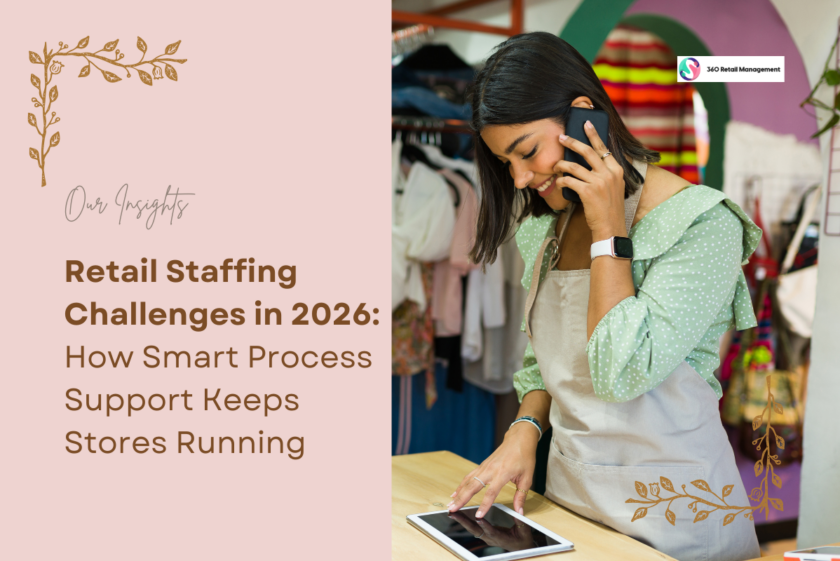
Retail Staffing Challenges in 2026: How Smart Process Support Keeps Stores Running
Walk into any retail store today, and you’ll notice something beyond the products on the shelves — the quiet tension of a workforce under strain. In 2026, keeping a store adequately staffed has become one of the most complex operational challenges retailers face. From high turnover to generational workforce shifts, the pressures are mounting. But smart process support is emerging as the decisive factor between stores that thrive and those that merely survive.
The Turnover Crisis Is Real — and Costly
The retail industry’s average churn rate now sits at nearly 50%, with some high-volume sectors hitting 80%. This is driven by “clopening” shifts (closing late and opening early), unpredictable scheduling that disrupts personal lives, and a perceived lack of clear career growth paths. The downstream effect is brutal: store managers end up spending the majority of their time recruiting and training rather than coaching teams and driving sales.
Retail executives are grappling with the dual pressures of ballooning wages and a historically low labour supply, finding that traditional recruitment, retention, and work-saving strategies are no longer sufficient to fill their need for customer-facing workers.
Struggling to Keep Your Store Fully Staffed?
If your team is constantly short-staffed or stuck in a cycle of hiring and rehiring, you’re not alone — but you don’t have to keep operating this way. Many retailers are already improving staffing stability and reducing hiring time by rethinking their processes.
Take the first step toward a more reliable workforce — explore how 360 Retail Management can help you streamline hiring, reduce turnover, and keep your store running smoothly.
The Generational Knowledge Gap
The talent challenge isn’t only about new hires walking out — it’s also about experienced workers heading toward the exit. A survey of 1,500 global frontline managers and employees across the US, UK, and Germany found that 72% of managers in retail and manufacturing are not confident their companies will be able to retain the knowledge and expertise lost when experienced workers retire. Separately, 48% of Gen Z employees are actively thinking about leaving frontline industries entirely.
This dual pressure — losing institutional knowledge at the top while struggling to retain younger workers at the entry level — creates a dangerous capability vacuum on the shop floor.
Competing With the Gig Economy
Retail is no longer competing only with rival brands for staff. Workers today — especially younger ones — value the flexibility and entrepreneurial spirit of gig work. The concept of working 35 to 40 hours a week on a fixed schedule doing one thing is simply not as attractive as it once was for the modern workforce.
Traditional hiring methods can be slow, leaving stores short-staffed during peak hours, which ultimately hurts both sales and customer satisfaction. Retailers who cling to rigid, outdated scheduling models are, in effect, pushing talent toward platforms like DoorDash and Uber.
Smart Process Support: The Path Forward
The good news? Forward-thinking retailers are fighting back — not by working harder, but by working smarter.
💡Technology-Driven Staffing: Retail staffing apps now allow managers to quickly post shifts, connect with pre-vetted workers, and fill open positions in hours rather than days — helping businesses adapt to fluctuating demand while reducing turnover and maintaining consistent service levels, even during peak seasons.
💡AI-Powered Recruitment: Automating the “boring” parts of hiring — initial screening, interview scheduling, filtering high-volume applications — means store managers spend their limited time only interviewing the most promising candidates rather than drowning in administrative tasks.
💡Retail Rescue Squads: Some leading retailers are deploying specialised teams to understaffed stores, sending trained personnel to assist with backlogged off-stage tasks like organising backrooms and restocking shelves. Reducing this unending pile-up of work actively protects frontline employee morale.
💡Workforce as Strategy, Not Triage: The companies finding the most success are those that approach staffing as a strategic function rather than a tactical fix. The goal across all models is the same: a dependable, motivated workforce that can adjust to the industry’s pace of change.
Fix Your Staffing Gaps Before They Cost You Sales
If staffing shortages, high turnover, and constant hiring cycles are slowing your store down, it’s time to take control. 360 Retail Management helps retailers build reliable, scalable staffing processes without adding internal pressure on store teams. From AI-powered recruitment and faster candidate screening to streamlined scheduling and operational support, we help you fill roles more quickly and keep your workforce stable.
Every unfilled shift is a missed sales opportunity — and every inefficient process is costing you time and margin. Let’s fix that.
Connect with 360 Retail Management today to build a smarter, more dependable retail workforce that keeps your store performing at its best.
The Bottom Line
Staffing firms and retail operators must be faster, more accurate, and capable of engaging with a larger volume of candidates — but without losing the human touch that builds genuine workplace relationships. The retailers who will win in 2026 are those who stop treating staffing as a problem to be patched and start treating it as a competitive advantage to be engineered.
Smart process support — combining AI tools, flexible staffing models, proactive knowledge transfer, and employee-first scheduling — isn’t just an operational upgrade. It’s the foundation on which the modern retail store stands.

