
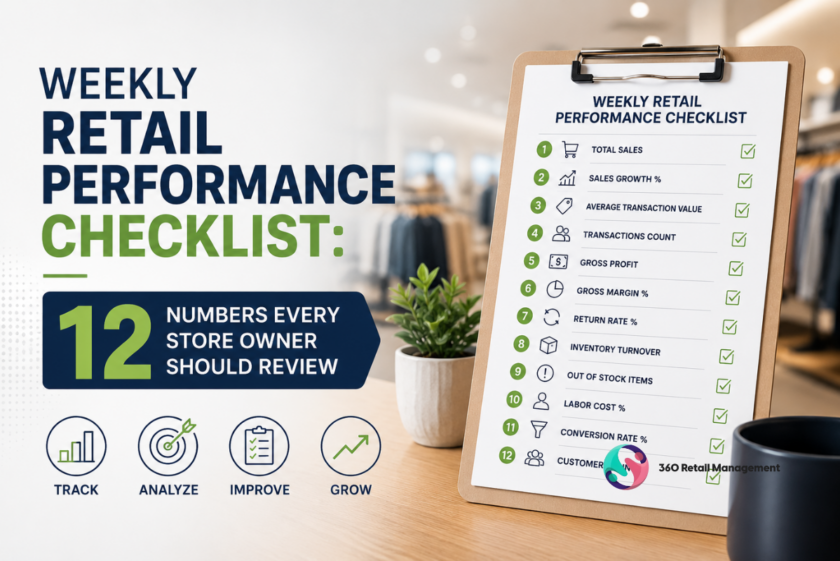
Weekly Retail Performance Checklist: 12 Numbers Every Store Owner Should Review
Running an independent retail store means wearing a dozen hats before noon. But the store owners who consistently grow — and stay profitable — share one habit: they look at the right numbers, every single week, without fail.
This isn’t about drowning in data. It’s about knowing your 12 most critical performance indicators so well that you can spot a problem on Tuesday and fix it before the weekend. Think of this checklist as your Monday morning pulse check — a 30-minute ritual that keeps your store running with clarity and confidence.
“What gets measured gets managed. What gets measured weekly gets managed well.”
Sales & Revenue
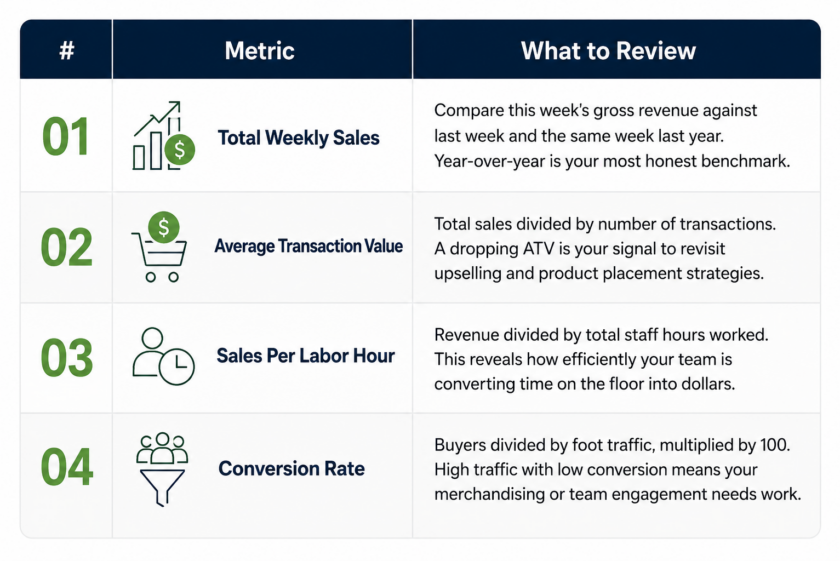
These four numbers tell you whether your store is trending up, flat, or quietly sliding — and they need to be reviewed together, not in isolation.
Inventory & Margin
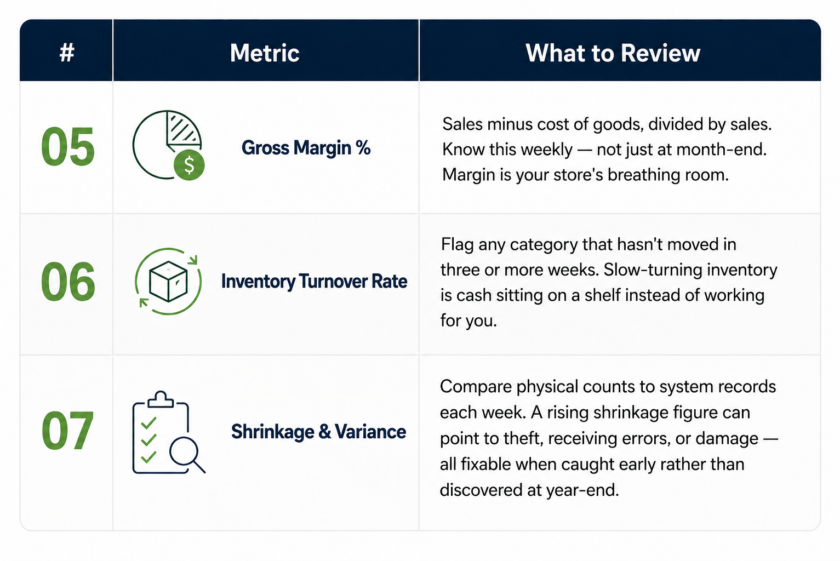
Inventory is where most independent retailers silently bleed cash. Reviewing these three metrics weekly helps you catch slow-movers, shrinkage, and margin erosion before they compound into a quarterly problem.
PRO TIP If your POS system can’t generate a weekly margin report in under two minutes, that’s a technology problem worth solving. Modern retail management tools should make this effortless — not a spreadsheet exercise.
Customers & Loyalty
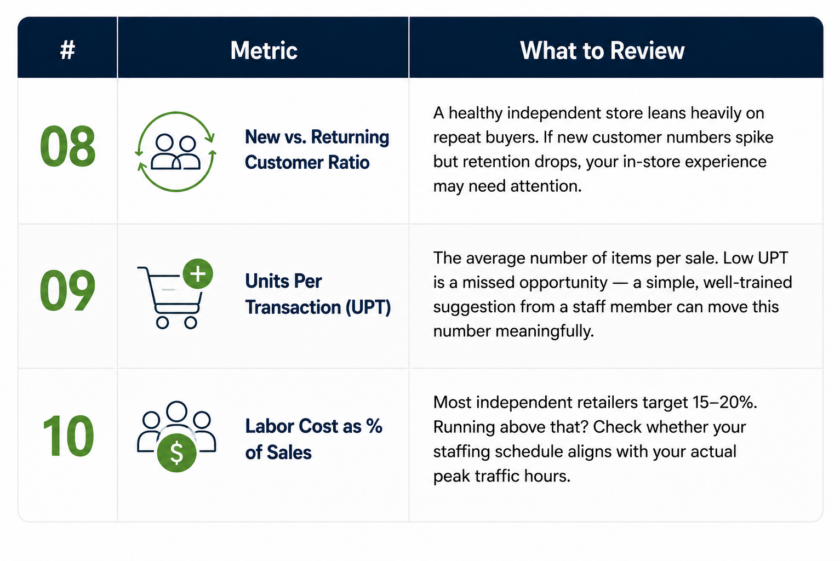
Independent retailers have a natural advantage over big-box competitors: they can actually know their customers. These two numbers tell you whether you’re building on that advantage or letting it slip.
Operations & Cash
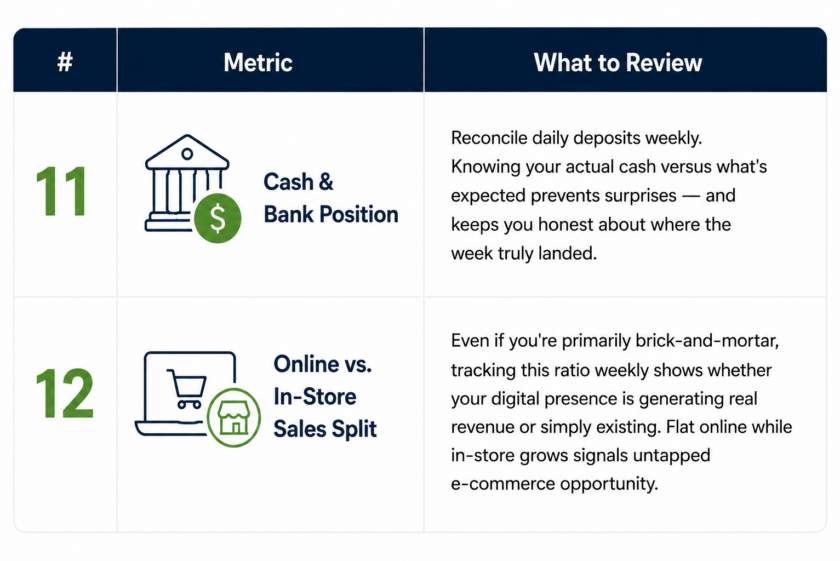
The day-to-day operational numbers that determine whether your store is actually profitable — or just busy. These three are non-negotiable for any owner managing their own finances.
Make It a Habit, Not a Chore
The goal isn’t to analyze these numbers endlessly — it’s to review them quickly, identify the one or two that need attention, and act. Most experienced store owners can move through all 12 in under 30 minutes once the habit is established and the right tools are in place.
Set a recurring block on Monday mornings. Keep a simple tracking sheet — digital or paper — so you can see week-over-week movement at a glance. And share the numbers with your team when relevant. Staff who understand performance metrics tend to take more ownership of outcomes.
Consistency is the competitive edge here. You don’t need perfect data. You need honest data, reviewed regularly, by an owner who knows what to do with it.